Water Heaters: Repair, Replace, and What Hard Water Does to Them
A water heater rarely fails all at once. It fails in stages, and most people live through two or three before they call anybody.
September 3, 2026 · 4 min read
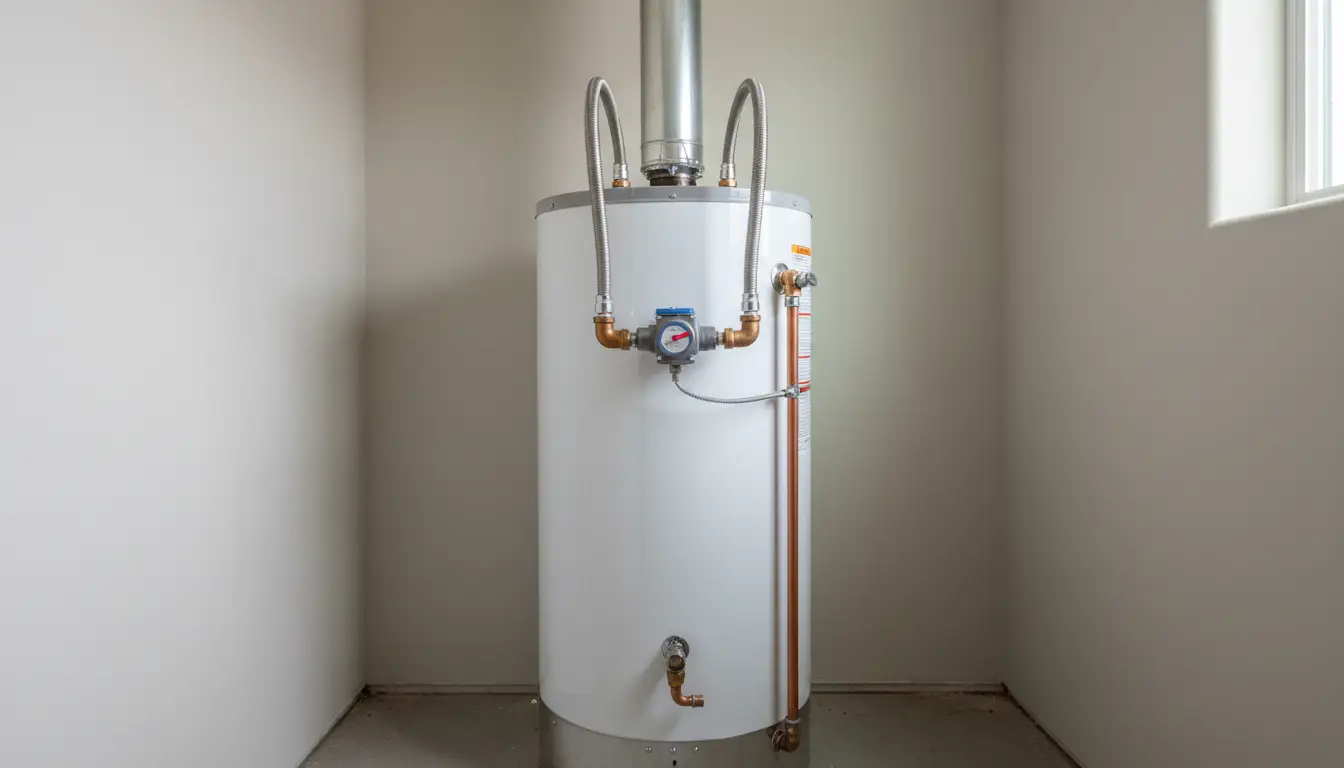
A water heater usually doesn't fail all at once. It fails in stages, and most homeowners live through two or three of those stages before they call anybody, mostly because a lukewarm shower is annoying but not an emergency, right up until the day it is.
The signs worth watching
- Water that used to run hot for a full shower and now runs out halfway through
- Rumbling, popping or knocking sounds from the tank itself
- Water with a slightly rusty tint or a metallic smell
- Water pooling at the base of the tank, even a small amount
- The pilot light or heating element cycling more often than it used to
- A tank somewhere past ten to twelve years old, whatever else is going on
Any single one of these is worth a look. The combination of age plus noise plus a drop in hot water usually means the tank is closer to the end than the middle.
Repair or replace
The honest answer is that it depends on what's actually failed and how old the unit is. A thermostat, a heating element, a bad valve, those are often repairable and worth repairing on a tank that still has years left in it. A tank that's leaking from the tank itself, as opposed to a fitting or a valve, is a different story, because a leaking tank doesn't get better and it doesn't get patched. We'll tell you honestly which situation you're in rather than push a repair on a tank that isn't going to make it much longer, or push a replacement on a unit that just needed a part.
If you bought the heater yourself
It happens more than people expect. You go to a big box store, buy a water heater off the shelf, and then need someone to actually put it in and hook it up correctly, including the gas or electrical connection and the venting if it's gas fired. We install and connect water heaters people have already purchased on their own just as readily as ones we supply, and we'll tell you upfront if the unit you bought is undersized or oversized for the household before it goes in rather than after.
What hard Southeast Texas water does over time
Water in this part of Texas carries a fair amount of mineral content, and that mineral content settles as sediment at the bottom of the tank over years of use. Sediment buildup is one of the quieter reasons a water heater loses efficiency and starts making noise before it fails outright, because the sediment sits between the burner or element and the water it's supposed to be heating. A tank that gets flushed periodically fights that buildup. A tank that never gets flushed is fighting it alone, and eventually loses.
This isn't a problem unique to any one brand or model. It's a function of the water itself, which means it applies pretty evenly across Nederland, Groves and Port Neches, wherever the water comes from the same regional supply.
Tank versus tankless, and why gas versus electric matters
A traditional tank heater keeps a set volume of hot water ready and reheats it as it's used, which is simple and familiar and works well for most households. A tankless unit heats water on demand instead of storing it, which can mean more consistent hot water for a larger household but comes with its own installation requirements, particularly around gas line sizing or electrical capacity depending on the model. Neither one is automatically the right answer. The right answer depends on household size, how the current unit is failing, and what the existing gas or electrical service can support without additional work. We'll walk you through what your specific situation calls for rather than steering you toward whichever unit happens to be in the truck.
Gas and electric units also fail differently and need different diagnostics. A gas unit's problems are often related to the burner, thermocouple, or venting, while an electric unit's problems usually trace back to one of the heating elements or the thermostat controlling it. Either way, proper installation includes a correctly set temperature and pressure relief valve and, on many modern installs, an expansion tank to handle the pressure changes as water heats and cools in a closed system. Skipping those details is exactly how a water heater that looks fine on the outside becomes a safety problem nobody planned for.
What we actually do
We diagnose on site, tell you plainly whether it's a repair or a replacement, quote it flat rate before starting either way, and if it's a replacement we'll size the new unit to the household rather than just swapping in whatever's closest to what came out. Call (409) 226-2451 if the water's running lukewarm or the tank is starting to talk to you.
Jim Snell Master Plumber Inc — (409) 226-2451
Call (409) 226-2451More articles
Why Slab Leaks Keep Coming Back in Jefferson County
The ground under a Nederland foundation never really sits still, and that's the whole reason this keeps happening.
What a Flat Rate Actually Means (and What Invoice Shock Is)
Most people bracing for a plumbing visit aren't really worried about the pipe. They're worried about the bill.