Why Slab Leaks Keep Coming Back in Jefferson County
The ground under a Nederland foundation never really sits still, and that's the whole reason this keeps happening.
September 3, 2026 · 4 min read
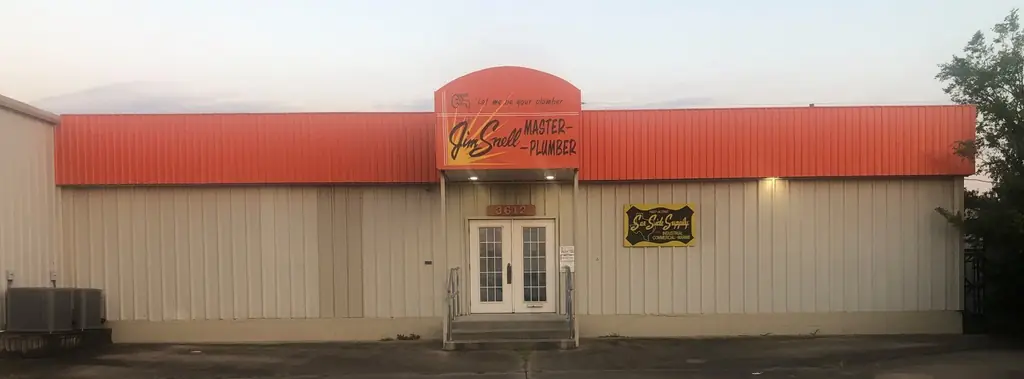
Nederland sits on some of the heaviest clay in Southeast Texas, and that clay is the reason slab leaks show up here again and again instead of being a once-in-a-lifetime event. The ground under your foundation was never sand or gravel. It's blackland and coastal clay that swells when it's wet and shrinks hard when it dries out, and Jefferson County gives it plenty of both, a wet season and a dry one, sometimes in the same month.
The clay doesn't sit still
A slab foundation is poured on the assumption that the ground under it stays put. Clay doesn't keep that bargain. It expands when rain soaks in and contracts when the summer heat pulls the moisture back out, and that movement flexes the concrete above it and the copper or CPVC lines running through it. A pipe that was laid straight and true the day the house was built can end up under real stress a few years later, not because it was installed wrong, but because the ground moved and the pipe didn't move with it. Add a high water table, which is normal this close to the coast, and you get soil that rarely fully dries out, which keeps the swelling and shrinking cycle going year after year instead of settling down.
Signs worth paying attention to
- A warm spot on the floor that wasn't there before, especially over a hot water line
- The water meter still spinning after everything in the house is off
- A water bill that jumps with no obvious reason
- A damp or spongy patch of carpet, or flooring that starts to buckle or separate
- The sound of running water inside a wall or under the floor when nothing is turned on
- A musty smell that won't go away no matter how much you clean
Any one of those by itself might be nothing. Two or three together, especially the meter and the smell, are worth a call.
Why we locate before anything gets opened
The wrong way to handle a slab leak is to guess where it is and start breaking concrete. We locate first, with electronic line locating equipment and high definition video pipe inspection, so we know exactly where the leak sits before a single section of slab comes up. That means the tunnel we dig, if a tunnel is what the job calls for, is a targeted excavation instead of a search pattern through your living room. Once the repair is done, we backfill it properly rather than leaving a rough patch behind. It takes a little longer on the front end. It saves a lot of floor on the back end.
The water adds up faster than people expect
The EPA puts the average household's leak loss at around 180 gallons a week, which works out to roughly 9,400 gallons a year, and a slab leak under a Jefferson County clay bed is exactly the kind of leak that runs quietly for a while before anyone notices. It's not usually a dramatic burst. It's a slow, steady loss that shows up on the water bill long before it shows up on the floor.
Why the seasons here make it worse
Southeast Texas doesn't have a mild wet-dry cycle. It has a hurricane season that can dump a foot of rain in a weekend and a summer that bakes the same ground hard for weeks at a stretch. That swing is bigger and faster than what clay soils see further inland, and it's the reason a slab that's held fine for twenty years can suddenly develop a leak after one unusually wet or unusually dry season. The pipe underneath didn't change. The ground around it moved more than it ever had before, and something finally gave.
Older homes carry a second factor worth knowing about. A lot of the housing stock in Nederland, Groves and Port Neches was built decades ago, when galvanized or early copper supply lines were standard, and both of those materials weather differently than what goes into a new home today. Age alone doesn't cause a slab leak, but an older line under constant clay movement has had more cycles of stress to absorb than a newer one, which is part of why slab leaks tend to cluster in the older sections of these towns rather than showing up evenly everywhere.
What the repair day actually looks like
Once the leak is located and marked, the work itself is more contained than most homeowners expect. We open only the section of slab over the confirmed leak location, not a wider search area, make the repair to the line, pressure test it to confirm the fix holds, and then backfill and patch the opening. Depending on where the leak sits and how deep the line runs, a straightforward slab leak repair is often a one-day job. A sewer leak under the slab, which usually runs deeper and may need a longer tunnel, can take a bit more time, but the same principle applies: locate precisely first, then do the smallest job the location allows.
We've been doing slab and sewer work in this county specifically for more than 25 years, which means we've dug under most of the neighborhoods in Nederland, Groves and Port Neches at one point or another, and we know how this soil behaves. If anything on that list above sounds familiar, call us at (409) 226-2451 and we'll come look at it properly before anyone touches the floor.
Jim Snell Master Plumber Inc — (409) 226-2451
Call (409) 226-2451More articles
What a Flat Rate Actually Means (and What Invoice Shock Is)
Most people bracing for a plumbing visit aren't really worried about the pipe. They're worried about the bill.
Water Heaters: Repair, Replace, and What Hard Water Does to Them
A water heater rarely fails all at once. It fails in stages, and most people live through two or three before they call anybody.